
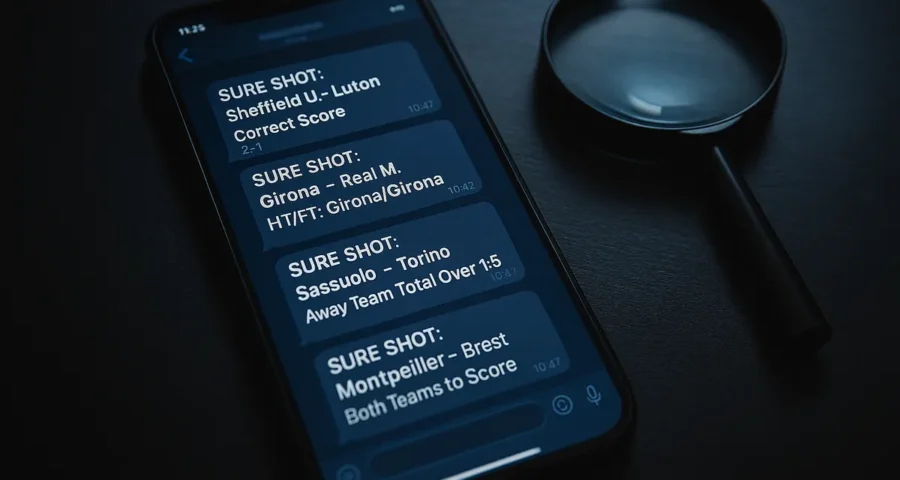
It’s 10:40pm and your phone buzzes. A Telegram channel you joined three weeks ago has dropped tomorrow’s “100% confirmed” multi-bet, complete with a screenshot of a winning slip and a photo of someone’s wrist wearing a watch worth more than your car. Subscription: ₹4,999 a month. Spots closing tonight.
You already know how that story usually ends. What’s harder is spotting it before you pay. The betting tipster red flags that matter are rarely dramatic, and the recent legal mess surrounding one of the world’s most followed betting personalities shows exactly how far a loud online brand can run ahead of actual accountability.
Vegas Dave’s legal troubles: a wake-up call for bettors
David Oancea, known online as “Vegas Dave” to more than nine million Instagram followers and familiar to viewers of Showtime’s 2019 sports betting docuseries Action, is currently the subject of a second arrest warrant in Nevada. The underlying case has nothing to do with his picks. In July 2025, District Judge Timothy Williams ordered Oancea to pay a $30.2 million judgment in a civil dispute brought by Cabo Platinum, a luxury vacation rental company in Mexico, which accused him of interfering with confirmed bookings at several properties.
What followed is the part bettors should pay attention to. In September 2025 he was ordered to surrender assets including three Mexican properties, $375,000 in cryptocurrency, a Richard Mille watch and several Hermès Birkin bags. He claimed he no longer had them. After a six-day evidentiary hearing, District Judge Tara Clark Newberry found his testimony “false,” “inconsistent,” and “evasive,” and wrote plainly: “This court finds that Mr. Oancea was not a credible witness.” She also awarded Cabo Platinum nearly $294,000 in attorneys’ fees and $17,000 in costs.
A no-bail bench warrant was issued on 13 August after he skipped a surrender hearing. He then posted social media videos of himself abroad, including a private jet clip captioned “Wheels up #borabora” and later footage from Thailand. When he failed to appear again, District Judge Joe Hardy ordered a second warrant with bail set at $1 million.
To be fair about it: this is a civil contempt matter over a rental dispute, not a conviction for defrauding bettors. But that’s almost the point. The gambling personality scams and dubious tout operations that cost everyday punters money rarely come with a court verdict attached. What you get instead is a signal, and the signal here is simple. A judge examined this person’s statements under oath and did not believe them, while the social feed kept rolling out jets and islands. If you were paying for his picks, nothing in that feed would have told you any of it.
Red flags every bettor should know
Most unreliable tipster services share the same handful of tells. Learn these and you’ll filter out the worst offenders in about five minutes of scrolling.
Promises of guaranteed wins
No one can guarantee a sporting outcome. “Sure shot”, “100% fixed”, “confirmed jackpot” — these phrases are not marketing exaggeration, they are a claim about reality that cannot be true. Bookmakers build a margin into every price, so even sharp bettors operate on thin long-term edges and losing weeks. Anybody selling certainty is selling something else.
Unverifiable track records
Screenshots of winning bet slips prove nothing. They can be cropped, staged, or simply selected from hundreds of losing slips that never got photographed. A credible record shows every pick, the odds taken, the stake size and the result, published before the event starts. If you can only see the wins, you are not looking at a record. You’re looking at a highlight reel.
High-pressure sales tactics
Countdown timers, “only 10 slots left”, lifetime VIP tiers, and the classic upsell where a loss is answered with “the real picks are in the premium group”. Pressure exists to stop you from checking. Any genuinely profitable service has no reason to rush you into a decision tonight.
Lifestyle as evidence
Rented Lamborghinis, hotel suites and watch collections are the cheapest props in the business, and the Oancea case shows how quickly the asset side of that image can come apart in court. Wealth could come from selling subscriptions, from another business entirely, or from debt. It is never proof of betting skill.
No accountability for losses
Watch what happens after a bad run. Honest handicappers post the losing month, explain variance, and keep the numbers public. Unreliable ones delete posts, edit pinned messages, mute the channel for a week, or blame you for not following the staking plan they never published.
Anonymity plus money
Unregistered operators, payment requested to a personal UPI ID or wallet, no company details, no refund terms, no verifiable identity. If something goes wrong you have no counterparty to complain about, which is a problem Indian bettors run into constantly with WhatsApp and Telegram prediction groups.
| Red flag | Why it’s a problem | What credibility looks like |
|---|---|---|
| “Guaranteed” or “fixed” picks | Outcomes are uncertain by definition; the claim is false on its face | Stated edge with honest talk about variance and losing runs |
| Winning slip screenshots only | Selective evidence; losses are invisible | Full pick log with odds, stakes and results, timestamped |
| Urgency and limited slots | Stops you from doing basic checks | Open pricing, free trial period, clear refund terms |
| Luxury lifestyle as proof | Unrelated to betting performance; easily faked or financed | Verified performance data, not possessions |
| Payment to a personal account | No recourse, no paper trail, no accountability | Registered business, invoices, documented terms |
How to verify betting advice claims
Verification is mostly arithmetic and patience. Work through these steps before you pay anyone for unverified betting tips.
- Ask for the full log, not the wins. Request every pick from the last six months with the odds attached. A flat “no” or a vague “we don’t share that” answers your question for you.
- Check that picks were published before kick-off. Timestamps in a public channel, a third party tracking site, or an archived post. Results posted after the fact are worthless as evidence.
- Convert the claimed hit rate into a break-even test. A win percentage means nothing without the odds. Divide 1 by the decimal odds to get the implied probability, which is the rate you’d need just to break even before margin.
- Count the sample size. Twenty winning picks can happen by luck. Hundreds of logged bets across different markets tells you more, and even then professional-level records show losing months.
- Search beyond their own channel. Look for complaints, reposted screenshots, chargeback reports, and whether the person has ever acknowledged a bad month in public.
- Read the terms. Refund policy, cancellation process, what “VIP” actually includes. If there are no written terms, there is no deal.
Here’s the break-even maths that most tipster marketing quietly ignores:
| Decimal odds | Implied probability | Win rate needed to break even |
|---|---|---|
| 1.80 | 55.6% | 55.6% |
| 1.91 | 52.4% | 52.4% |
| 2.00 | 50.0% | 50.0% |
| 2.50 | 40.0% | 40.0% |
So a service boasting an 80% strike rate on short-priced favourites at 1.30 is telling you less than it sounds: break-even there is 76.9%. And if they add a subscription fee on top, the bar rises again.
The real risks of following unproven tipsters
The subscription is rarely the biggest cost. ₹5,000 a month hurts, but the behavioural damage costs more.
Borrowed confidence changes how you stake. When a bet feels like someone else’s expertise rather than your own guess, people bet bigger than their bankroll management plan allows, because the uncertainty has been outsourced. That’s how a 2% stake becomes a 15% stake on a “max confidence” pick.
Then comes chasing. A tipster-led losing week usually arrives with a nudge to recover it, often through accumulators with longer odds and worse expected value. Chasing losses is one of the clearest warning signs of gambling harm, and paid picks give it a respectable-looking excuse.
You also stop learning. Outsourcing every decision means you never develop the ability to read a price, spot margin, or judge whether a market is worth touching. And on the sports betting advice risks nobody advertises: unregulated groups collect your phone number, payment details and betting habits, then sell or reuse them. Indian bettors report being cycled through multiple “VIP” channels after a single purchase.
Finally, the structural reality. Bookmakers price with an overround and the house holds an edge over time. Paying a fee to play a negative expectation game makes the hill steeper, not flatter. If you want the underlying mechanics, start with the sports betting basics rather than someone’s picks.
Protecting yourself: a due diligence checklist
Run any betting advice source through this list before money leaves your account. Avoiding betting scams is mostly about refusing to skip steps.
- Can you see every pick from the past six months, with odds and stakes, posted in advance?
- Does the sample run to hundreds of bets, not dozens?
- Has the person publicly acknowledged a losing period?
- Is there a real business entity, written terms and a refund policy?
- Is the fee paid through a traceable, reversible method rather than a personal UPI ID or crypto wallet?
- Does the pitch avoid words like guaranteed, fixed and sure shot entirely?
- Would you still make this bet at this stake if no one had tipped it?
- Does the monthly cost fit inside money you’ve already set aside for entertainment and can afford to lose?
Two or three failures on that list is enough to walk away. Set your own deposit and loss limits, keep stakes to a small fixed share of your bankroll, and treat betting as paid entertainment with a built-in house edge rather than income. If it’s stopped feeling like entertainment, our responsible gambling guide covers limits, cool-off periods and support options. Betting is for adults of legal age only.
FAQ
How do you spot betting scam tipsters?
Look for guaranteed-win language, screenshots instead of a complete pick log, urgency tactics, lifestyle content used as proof of skill, and payment requested to a personal account. Any one of those should slow you down; two or more means move on.
How can I verify betting advice?
Ask for every pick from the last six months with odds, stakes and timestamps that predate each event, then check the claimed win rate against the break-even rate implied by those odds (1 divided by the decimal price).
Why do betting tipsters fail?
Because bookmaker margins mean long-term edges are thin and variance is large. Short winning runs happen by chance, so a small sample of wins can look like skill. Services built on that illusion collapse once the sample grows.
Does the Vegas Dave case mean his betting picks were fake?
No. The Nevada proceedings concern a civil judgment and contempt findings in a vacation rental dispute, not his handicapping. The relevant lesson is that a judge found his sworn testimony not credible while his public feed showed only success, which is exactly the gap bettors should test for before trusting anyone’s claims.
Leave a Reply