
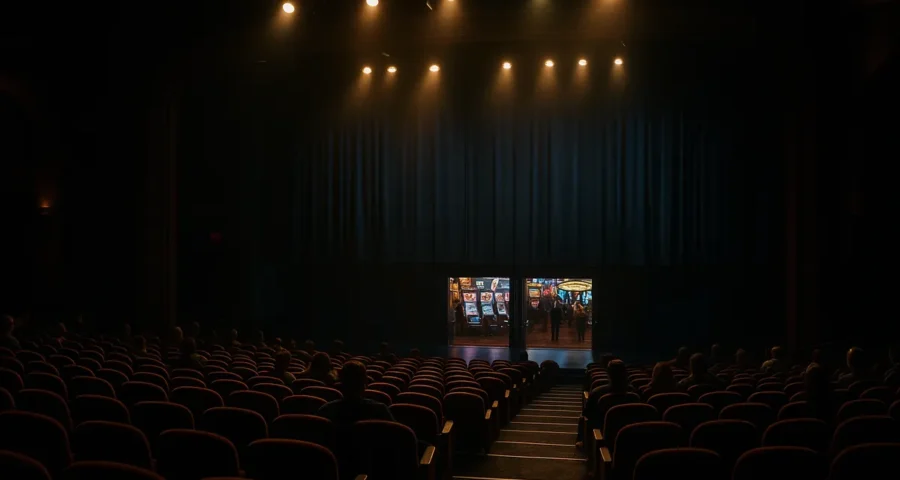
Who actually pays for a six-night K-pop residency at The Colosseum?
Not the ticket buyer, or at least not mostly. A casino music residency is one of the few entertainment products where the show itself can be the least interesting line on the P&L. The ticket gets a guest onto the property on a specific night; everything that happens in the eleven hours either side of the encore is where a resort operator expects to make the margin back.
That gap between the public story and the operating logic produces a lot of confident nonsense about Vegas entertainment. Below are the misconceptions worth correcting, with the mechanics underneath each one.
Myth 1: a casino music residency lives or dies on ticket sales
Ticket revenue matters, but it is routinely the thinnest part of the economics. Superstar fees, production costs, promoter splits, crew, and in many cases a guarantee paid regardless of attendance mean a headline residency can be run at or near break-even on the box office alone. Operators very rarely publish per-show accounts, so treat any precise margin claim with suspicion. The structural point is not in dispute inside the industry: the show is sold as a demand generator, not a profit centre.
Where the money actually shows up
Spread across departments that never appear on the marquee:
- Room nights, usually at a higher average daily rate than the same midweek date would otherwise command
- Food and beverage, from the pre-show steakhouse booking to the 1am noodle bar
- Bars, nightclubs and dayclubs catching the post-show crowd
- Retail and merchandise, where the venue often takes a percentage
- Parking, resort fees, spa and attraction add-ons
- Gaming, which is the line everyone assumes dominates and frequently does not
A resort with 3,000-plus rooms, a dozen restaurants and a casino floor has many ways to monetise a guest who has already committed to being on site. The residency’s job is to create the commitment.
Cross-selling to entertainment guests
The genuinely valuable asset from a concert night is the data. A ticket purchase gives a name, an email, a payment method, a price sensitivity and a music taste, which is far richer than anything an anonymous slot session produces. Plug that into a loyalty programme and the entertainment buyer becomes a marketing target for the next twelve months: show offers, dining credits, room rates, tournament invites. Customer lifetime value, not tonight’s gate, is the number that justifies the booking fee.
Myth 2: Caesars Palace shows are booked on fame alone
Fame is table stakes. What gets a deal approved is which audience the fame brings, and whether that audience is one the property currently fails to reach.
Buying a demographic, not a setlist
LISA’s run at The Colosseum is the cleanest recent example. She is the first K-pop artist with a Las Vegas residency; the initial four dates reportedly sold out in under ten minutes, and the run was expanded to six. Her commercial record is not in question either, Blackpink sold out Allegiant Stadium in August 2023 and grossed over $11.4 million, still the high-water mark for a single concert by a vocal group. She also carries the largest Instagram following of any K-pop performer, around 107 million.
Read that as an audience acquisition play. It skews younger, heavily international, and is disproportionately female, three groups the classic Strip casino customer profile underserves. Some of those guests will never touch a blackjack table. They will book rooms, eat, shop, and post relentlessly, which is marketing the resort does not pay for directly.
Brand positioning and the calendar problem
Residencies also solve a scheduling problem. Vegas has no trouble filling a Saturday in March; it has plenty of trouble filling a Tuesday in a soft month. An anchor act with recurring dates smooths occupancy into the weak parts of the calendar. Carlos Santana’s House of Blues residency at Mandalay Bay, running since May 2012 and heading into its 15th year with more than 300 shows, is a case study in reliability rather than spectacle, and the new 2027 dates cluster in January and May for exactly that reason.
Myth 3: Vegas entertainment revenue is mostly about ticket prices
Pricing tiers matter, but capacity and venue cost set the ceiling long before anyone picks a price. A purpose-built theatre inside a resort is a capital asset with a long payback period, and it has to be fed year-round. That is why operators care about utilisation rates, the number of dark nights, and whether a venue can flex between a seated concert, a comedy night, a corporate buy-out and a boxing card.
Per-guest spending, not per-ticket revenue
The metric that drives decisions is total spend per attendee across the visit, modelled against the incremental cost of putting the show on. Operators typically look at how many ticket buyers convert into hotel guests, the uplift in average daily rate on show nights, food and beverage capture rates, and attributable gaming revenue from guests whose first touchpoint was a concert. One residency night with a high local, drive-in audience and one with a high fly-in audience can post identical box office and wildly different contribution. Local attendees go home after the show. Fly-in attendees stay two or three nights.
Myth 4: a residency deal is just a nightly fee
Deal structures vary enormously, and the fee is often the least negotiated part. The terms that decide whether casino resort economics work out tend to be these:
- Guarantee versus backend split, and where the breakpoint sits
- Production cost responsibility, which can dwarf the artist fee for a heavily staged show
- Radius clauses restricting nearby or regional performances during the run, protecting the venue’s exclusivity
- Merchandise and VIP package splits
- Length and option structure, so a successful run can be extended without renegotiating from zero
- Ticketing control, because the promoter or venue holding the data holds the remarketing value
Different residency models buy different things, which is why one property can run all of them at once:
| Model | Example | What the operator is buying | Main risk |
|---|---|---|---|
| Limited-run event residency | LISA, six dates at The Colosseum, Caesars Palace | Demand spike, a new demographic, global press coverage | Short window, little repeat-visit habit formed |
| Long-run anchor residency | Santana, House of Blues at Mandalay Bay, 300-plus shows since 2012 | Predictable midweek occupancy and a dependable F&B driver | Audience ages with the act, novelty decays |
| Short touring stop | A Perfect Circle, BleauLive Theater at Fontainebleau, June 2027 | Weekend fill, a genre test for a newer venue | No exclusivity, fans may not stay on property |
| Produced catalogue show | “Roger Waters Presents Legacy” at The Pearl, Palms | Brand-name draw without a superstar fee | Needs explaining to casual buyers, lower impulse demand |
Success metrics follow the model. A six-night event residency is judged on sell-out speed, hotel pickup, press reach and new loyalty sign-ups. A 15-year anchor residency is judged on occupancy on otherwise soft nights and cost per filled room.
Myth 5: concertgoers walk out of the theatre and straight onto the tables
Some do. Many do not, and the conversion rate varies enormously by audience. A rock residency crowd and a K-pop residency crowd behave differently on the floor, and an operator who models them identically will be disappointed.
What live events at casinos reliably do is change the shape of foot traffic. Theatres are positioned so that getting to them means crossing the gaming floor, usually twice. Show nights push arrivals earlier and departures later, which lengthens the time guests spend inside the building with a drink in hand and no particular plan. Extended stays matter more than immediate conversion: a two-night stay built around a concert produces more total spend than a single evening ever could.
The gaming side of that equation deserves to be stated plainly rather than dressed up. Every casino game carries a built-in house edge, so over time the floor returns less than it takes in wagers, which is precisely why it can subsidise entertainment. That is the business model, not a loophole. Published figures from the Nevada Gaming Control Board track statewide gaming win monthly for anyone who wants to see how the non-gaming and gaming mix has shifted on the Strip over the years. If you do plan to play while you are there, set a budget before the show, treat losses as the cost of an evening out, and use deposit or loss limits where the operator offers them.
Frequently asked questions
How do casino residencies make money?
Mostly indirectly. Ticket income often barely covers artist fees and production, so the return comes from hotel room nights at higher rates, food and beverage, retail, nightlife, parking and gaming spend from guests the show brought to the property, plus the long-term marketing value of their contact and spending data.
Why do casinos book music stars?
To reach audiences the property cannot attract on its own and to fill weak dates. A booking like LISA at Caesars Palace brings a younger, more international, heavily online audience; a long-running act like Santana delivers dependable midweek occupancy instead.
What is a casino residency deal?
An agreement for an artist to perform a defined series of dates at one venue over a set period. Terms typically cover the fee or revenue split, who pays production costs, radius clauses limiting nearby shows, merchandise and VIP splits, ticketing control, and options to extend the run.
The tell, if you want one, is how properties talk about these runs. Nobody announces a residency by projecting box office. They announce dates, on-sale times and sell-out speed, because the real product is a dated reason to be in the building. For more on how resorts balance these lines, see our analysis of casino revenue streams and our coverage of Las Vegas gaming industry trends.
Leave a Reply