
Start by killing the myth: the camera didn’t catch it
If you picture insider casino fraud getting busted by a surveillance operator spotting sleight of hand on a monitor, drop it. That almost never happens first. What usually opens a file is far more boring: a table that loses money it has no mathematical business losing, and a paper trail that can’t explain why. Cameras come later, to prove what the numbers already suggested.
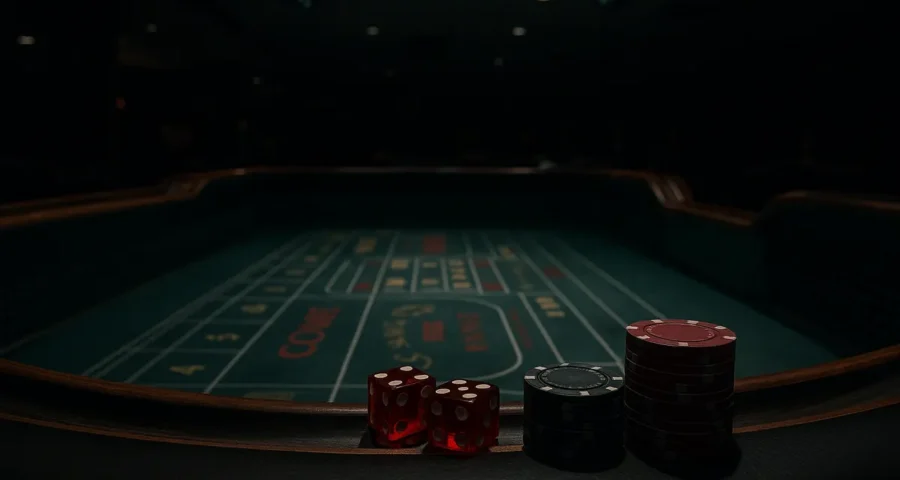
The craps cheating scheme at Harrah’s Cherokee Valley River in Murphy, North Carolina is a clean case study in that order of events. A dealer with roughly a decade on the floor, a friend at the table, and a hybrid electronic craps game where one person typed in the result of every roll. More than $131,000 gone in hours. And then, inevitably, a federal indictment and a guilty plea.
What happened at Harrah’s Cherokee Valley River
According to federal court filings in the Western District of North Carolina, Lateek Kahmal Taylor, known as “Tray,” agreed to plead guilty to taking part in a scheme to defraud the tribal casino. Taylor had worked there since around 2014 and was dealing the property’s Quartz hybrid electronic craps game. His seat mattered: as the stickman, he ran the game and entered the outcome of each dice roll into a computer terminal.
Prosecutors say he conspired with Donta Dewayne Harris, also known as “Johnny Mathis,” plus others “known and unknown” to the grand jury, between July 18 and August 31, 2024. Harris would text Taylor to learn when he was working, show up with a group of players, and coach them on how and where to bet while Taylor dealt.
The manipulation ran two ways:
- Phantom “bad rolls.” When Harris was shooting, Taylor would sometimes falsely call a losing throw a bad roll, meaning it didn’t count, and hand the dice back for another attempt.
- Falsified results. Other times Taylor simply keyed a winning result into his terminal regardless of what the dice actually showed. Filings cite August 26, 2024, at 2:26 p.m.: Harris rolled a 6 and a 3, and Taylor entered a 6 and a 4, flipping a loser into a winner.
Over several hours that afternoon, losses at that one Quartz craps table reached $131,858.36. Harris handed Taylor about $45,000 in cash across the month the scheme operated.
A federal grand jury indicted both men in April on theft from an Indian gaming establishment, wire fraud, and money laundering. The laundering count alleges they cashed Ticket-In, Ticket-Out (TITO) vouchers holding fraud proceeds in a way designed to hide the source of the money and dodge state and federal reporting thresholds. Prosecutors are seeking forfeiture of at least $131,858.36. Taylor’s plea hearing was set for October 9 in federal court in Asheville. Harris pleaded not guilty on August 12 and asked for a jury trial, with a docket call scheduled for November 2.
How casinos detect craps table fraud, and which method actually works
Court documents don’t spell out what triggered this particular investigation, so treat the following as how the industry works rather than a play-by-play of this case. Four detection layers do the real work, and they are not equally good at catching insiders.
Surveillance technology
Every table sits under overlapping camera coverage, and craps gets more than most because the layout is busy and the bets are many. Modern systems tie footage to timestamps, so an auditor can pull 2:26 p.m. on a given date and watch one roll frame by frame. That is exactly how a claim like “the dice showed 6 and 3, the terminal says 6 and 4” becomes evidence. What surveillance is bad at is noticing the problem on its own. Nobody is watching 200 live feeds hoping to see a stickman miscall a roll.
Statistical monitoring
This is the layer that finds insiders. Craps is a low-edge game by casino standards, the pass line carries a house edge of about 1.41% and don’t pass about 1.36%, so a table grinds out a modest, fairly predictable share of the money wagered over time. A single table dropping six figures in a few hours is a screaming outlier, not variance. Analysts compare actual results against expectation by table, by shift, and by crew. When one dealer’s shifts keep showing abnormal losses, the pattern names the suspect for you.
Pit boss oversight
The floor supervisor and boxman watch procedure, not math: dice handling, call accuracy, payout size, who is betting what and when. Good pit supervision catches sloppy cheating in minutes. Its weakness is social, a supervisor who trusts a ten-year veteran running a familiar game is less likely to second-guess a “bad roll” call.
The money trail
Cash and tickets leave records that cheating cannot erase. TITO vouchers are logged, cage redemptions are recorded, currency transaction reporting kicks in at thresholds, and large wins get documented. Structuring cash-outs to stay under reporting limits is itself a crime, which is why the laundering count exists here alongside the theft count.
| Detection layer | Best at | Blind spot |
|---|---|---|
| Surveillance cameras | Proving exactly what happened on a specific roll | Rarely spots insider fraud in real time |
| Statistical monitoring | Flagging impossible results and linking them to a crew member | Needs time and volume; won’t identify the method |
| Pit supervision | Procedure errors, odd betting patterns, bad payouts | Human trust and familiarity with long-serving staff |
| Cage and TITO audits | Following the money out of the building | Sees the cash-out, not the rigged roll |
The verdict: statistics open the case, audit trails and phone records build it, and surveillance closes it. A scheme can beat any one layer for a while. Beating all four is the part nobody manages.
The layers protecting a craps table
Craps is one of the most procedure-heavy games on the floor, which is worth understanding if you play it. If you want the mechanics of the bets themselves, start with our guide to craps rules and bet types; the protections around those bets look like this:
- Crew structure. A full dice table runs with a boxman, two base dealers, and a stickman, under a floor supervisor. Each one sees what the others do, so no single person controls both the roll and the payout.
- Dice control procedures. Dice are logo-stamped and serialised, inspected, rotated, and retired on a schedule. Rules govern how a shooter must handle and throw them, and what counts as a no-roll.
- Chip accountability. Trays are counted, fills and credits are documented, and drop boxes are reconciled in the count room rather than on the floor.
- Rotation and break policy. Dealers move between positions and tables through a shift. Rotation exists partly for concentration, partly to make a long collusive run with the same player harder to sustain.
- Digital logs on hybrid games. On an electronic craps game, every entry is time-stamped and attributed to a terminal and a user. That is a control, not just a convenience.
Notice the uncomfortable detail in this case. A hybrid game settles bets from a typed input, which concentrates authority in whoever does the typing. The same design that makes results auditable also made the alleged fraud possible in the first place, and then made it provable.
Why dealer cheating schemes fail
Insider schemes don’t collapse because of one brilliant investigator. They collapse because they generate evidence faster than they generate money.
- The math screams. You cannot hide a six-figure hit on a single low-volatility table in an afternoon. Casinos are built to notice precisely that.
- Everything is logged. Terminal entries, camera footage, voucher redemptions, cage transactions, shift schedules. Investigators can line up a timestamp in a database with a timestamp on video.
- Accomplices multiply risk. This one allegedly involved a group of bettors being told where to place chips. Every extra person is another phone, another interview, another witness.
- Phones tell on you. Texting a dealer to ask when he’s working creates a record of coordination that is very hard to explain away.
- Cashing out is the hardest part. Winnings have to leave as cash or tickets, and that path runs straight through reporting rules. Trying to stay under those thresholds adds charges rather than cover.
- Greed accelerates. Schemes escalate until they trip the alarm they were small enough to avoid. Hours, in this case.
What a guilty plea actually costs
Taylor faces federal exposure on theft from an Indian gaming establishment, wire fraud, and money laundering, with prosecutors pursuing forfeiture of at least $131,858.36. Federal sentencing is driven heavily by loss amount, role in the offence, and cooperation, so the final outcome rests with the court, but a six-figure loss figure and a laundering count are not the ingredients of a slap on the wrist. Harris, who denies the charges, is heading toward trial, and the presumption of innocence applies to him.
The career consequence is absolute. Table games staff at tribal and commercial properties are licensed or permitted by a gaming commission or state regulator, and a felony fraud conviction tied to gaming ends that eligibility. Names also land on exclusion lists shared across operators, which closes the door on the patron side too.
Cases like this reshape procedure more than they reshape law. Expect more scrutiny of games where a single employee inputs outcomes, tighter review of no-roll and void calls, and sharper alerting when one table’s results drift from expectation during a specific crew’s shift. If you’re interested in how those controls work across the rest of the floor, our overview of casino security and game integrity covers the equivalent safeguards on slots and live dealer games.
FAQ
How do casinos detect cheating?
Mostly through results analysis. Operators compare each table’s actual performance against mathematical expectation and investigate outliers, then use time-stamped surveillance, terminal logs, cage and TITO records, and staff schedules to establish who was present and what they did.
What are craps table security measures?
A multi-person crew with separated duties, a floor supervisor and boxman watching procedure, serialised and inspected dice, documented chip fills and drop reconciliation, dealer rotation, full camera coverage, and audit logs on electronic or hybrid games.
Why do dealer cheating schemes fail?
Because they must beat several independent systems at once, and they leave a digital trail while they try. Statistics flag the anomaly, logs and footage identify the method, and the cash-out path runs through reporting requirements that are designed to catch exactly this.
What this means if you’re the one at the table
Honestly? It should reassure you. The same monitoring that caught an alleged insider scheme is what keeps the game you’re playing straight, and the house edge on craps is small enough that it never needs help. Play for entertainment, set a deposit and loss limit before you sit down, and walk away when you hit it. If gambling stops feeling like a game, use the operator’s cool-off or self-exclusion tools, or contact a national problem gambling helpline. 18+ only.
Leave a Reply